Insights
|
Share
Zero Trust Has a Messaging Blind Spot
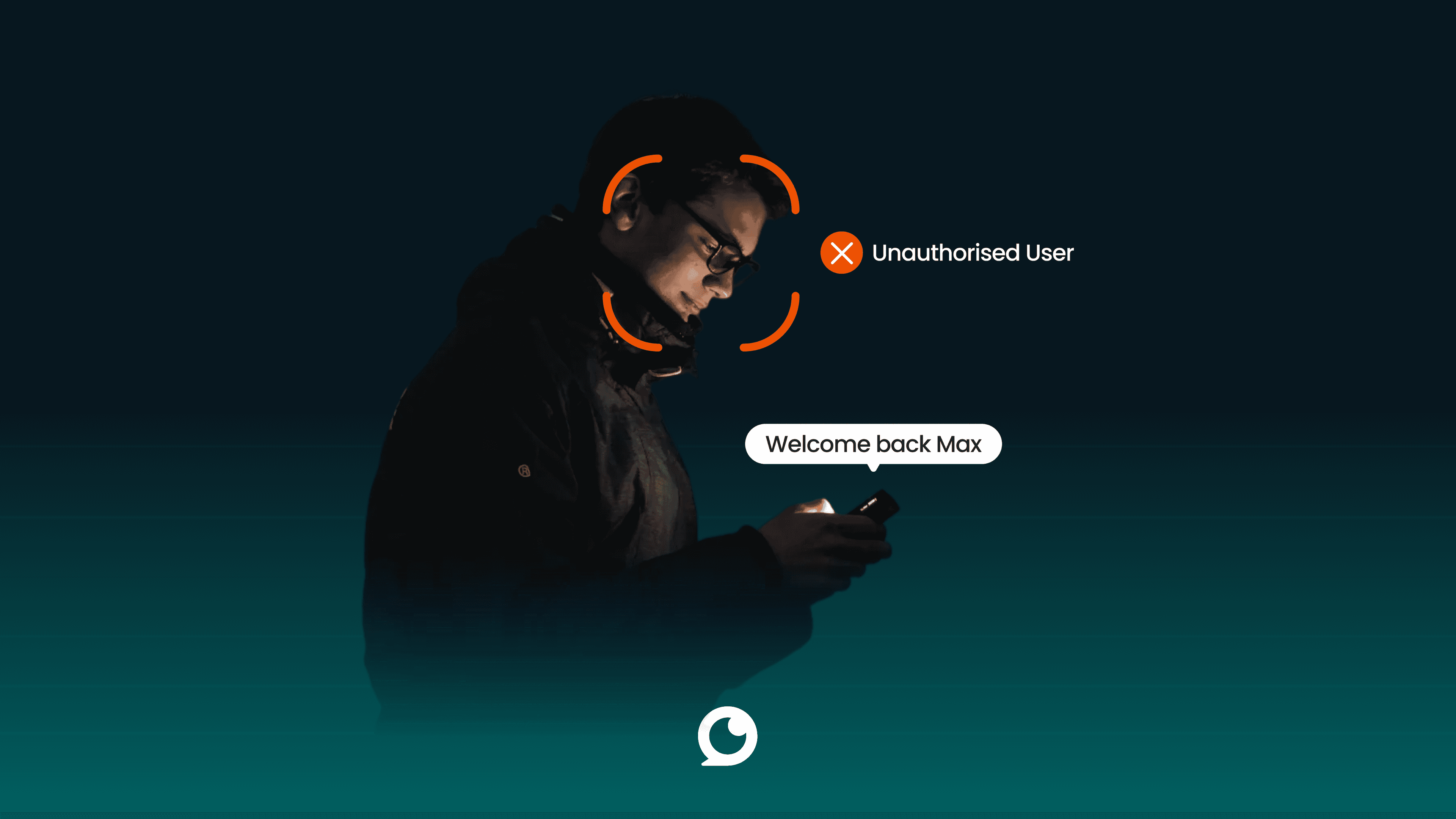
Zero Trust architecture is, by most measures, the most significant shift in enterprise security thinking of the past decade. The principle is disarmingly simple: don't trust anything by default, verify everything, and assume the network is already compromised. It replaced the old perimeter model — castle walls, trusted interior — with something far more honest about the threat landscape.
And it has worked. Network access control, microsegmentation, device posture checks, and identity-based policy enforcement have all improved dramatically under Zero Trust frameworks and the models developed by Google, Microsoft, and others.
But there is a boundary where Zero Trust stops. And most organisations haven't looked hard at what's happening on the other side of it.
Where Zero Trust Ends
Zero Trust frameworks are predominantly concerned with access: who gets onto the network, which resources they can reach, under what conditions, and with what level of continuous verification. The principle of "never trust, always verify" is applied rigorously to network requests, to device health, to identity at the point of resource access.
The gap opens up at the application layer, and specifically, at the messaging layer.
Once a user has been verified and granted access to an application, most Zero Trust implementations hand off responsibility to that application. The session is trusted. The user is authenticated. What happens inside that session, who is actually using it, whether the right person is still present, whether the device has been picked up by someone else, falls outside the scope of what Zero Trust is typically designed to govern.
This is not a theoretical weakness in the framework. It is a deliberate boundary. Zero Trust is primarily an access control architecture. It was not designed to govern session-level identity assurance within applications.
The problem is that no one else is governing it either.
The 'Verified at Login, Trusted Thereafter' Model
Most enterprise messaging and communication platforms, including many that are marketed as secure, operate on a model that would be immediately recognisable to anyone who remembers the old perimeter security era: verify once, trust for the duration.
A user authenticates. The session is opened. From that point forward, the platform assumes that the session remains under the control of the authenticated individual. It processes messages, approvals, file transfers, and instructions on that assumption, with no mechanism to revisit it.
This is precisely the model Zero Trust was designed to replace at the network level. But it remains the default at the messaging layer.
The consequences are predictable and well-documented:
Account takeover at the session layer. An attacker who gains access to an authenticated device, whether through theft, social engineering, or malware, inherits the session. From the platform's perspective, they are the authenticated user. Every action they take is attributed to the legitimate account holder.
Device sharing in high-risk environments. In operational environments, trading floors, clinical settings, control rooms, field operations, devices are sometimes shared or left unattended. An authenticated session on a shared device grants access to anyone who picks it up.
Social engineering within authenticated sessions. An authenticated user, manipulated by a third party in real time, may send messages, approve transactions, or share information under the continuous but invisible influence of someone who would never have passed the initial authentication check. The session is legitimate. The control is not.
Insider threat at the session level. An employee with legitimate authentication credentials who uses a session outside authorised parameters, after hours, from an unexpected location, under duress, presents a risk that session-level verification would flag and that post-login trust models cannot detect.
None of these scenarios represent a failure of Zero Trust at the network level. All of them represent a failure of identity assurance at the session level.
Why Messaging Is the Highest-Risk Layer
Not all application sessions carry equal risk. A session in a project management tool presents a different risk profile from a session in which someone is approving a payment, authorising access to a sensitive record, or communicating operationally sensitive information.
Messaging sits at the highest-risk end of this spectrum for a reason that is often overlooked: it is the layer where decisions are made and instructions are given. A payment approval communicated over messaging is as consequential as the payment itself. A data request made over messaging carries the same compliance implications as the underlying data transfer. An instruction given over messaging in a defence or government context can have operational consequences that far exceed the session in which it was communicated.
And yet messaging is consistently the layer that receives the least attention in enterprise security architecture. It sits below the network controls that Zero Trust governs and above the endpoint controls that device management addresses. It falls into a gap.
The CBUAE's Notice 2058, issued in April 2026 and banning all consumer messaging platforms for financial institution use, made this point explicitly. The four risks the Central Bank identified, fraud and impersonation, unauthorised data disclosure, non-compliant data storage, and the absence of audit capability, are all session-layer problems, not network-layer problems. WhatsApp's encryption is not the issue. The absence of identity assurance within the session is.
What Zero Trust Looks Like at the Messaging Layer
Applying Zero Trust principles to the messaging layer requires a different set of controls from those that operate at the network level. The question is no longer "should this device be allowed to connect to this resource?" The question is "is the right person still present in this session, right now?"
Answering that question continuously, not just at login, not just at the initiation of a sensitive action, but throughout the session, requires continuous identity verification.
Continuous identity verification at the messaging layer means:
Verifying presence throughout the session, not just at its start. Identity is confirmed at regular intervals throughout an active session, not as a one-time gate. If confirmation cannot be maintained, the session ends, automatically, without requiring the user or the platform to take action.
Using signals that cannot be inherited by session takeover. A session token can be stolen. A password can be shared. Continuous facial recognition with liveness detection cannot be borrowed, transferred, or replicated. It ties session activity to the physical presence of the authenticated individual.
Producing a session-level audit record. Zero Trust's "verify explicitly" principle requires evidence. At the network level, that evidence is the access log. At the messaging layer, it is a session-level identity assurance record, a continuous log of verified presence that can be produced in the event of a complaint, investigation, or regulatory audit.
Closing the gap without disrupting the user. The practical objection to continuous verification has always been friction. Continuous facial recognition that operates passively in the background, without challenge-response prompts, without interrupting the user's workflow, answers this objection directly. The verification is invisible until it needs to act.
Extending Zero Trust to Where Decisions Are Made
Zero Trust's core insight was that trust cannot be assumed, it must be earned continuously, based on verified signals, and revoked the moment those signals are absent. That insight transformed network security.
The same insight, applied to the messaging layer, produces a very different kind of communication infrastructure. One where sessions are not trusted by default after login. One where the identity of the person sending a message, approving a transaction, or issuing an instruction can be continuously asserted and audited. One where the gap that currently exists between network-level verification and session-level trust is closed.
For organisations that have invested seriously in Zero Trust architecture, this is not a new principle. It is the application of an existing principle to a layer that has, until now, been left out of the framework.
The messaging layer is where your people make decisions. Zero Trust should follow them there.
YEO: Continuous Identity Verification for the Messaging Layer
YEO delivers identity-verified communication infrastructure for regulated organisations, combining continuous on-device facial authentication, zero server storage of biometric data, and structural controls against forwarding and screen capture.
The YEO CFR SDK brings continuous identity verification to any regulated application, enabling developers to apply Zero Trust-consistent identity assurance at the session layer, not just at the network perimeter.
To learn more, visit yeomessaging.com or contact us at info@yeomessaging.com.
Share


About us
We stopped asking "who logged in." We started asking "who's still there." YEO began as a secure messaging app. Today we build the patented continuous identity verification infrastructure that regulated industries trust to prove who's really there.