Insight
|
Share
Continuous Identity Verification… What It Is and Why It Matters
Most security systems verify your identity once.
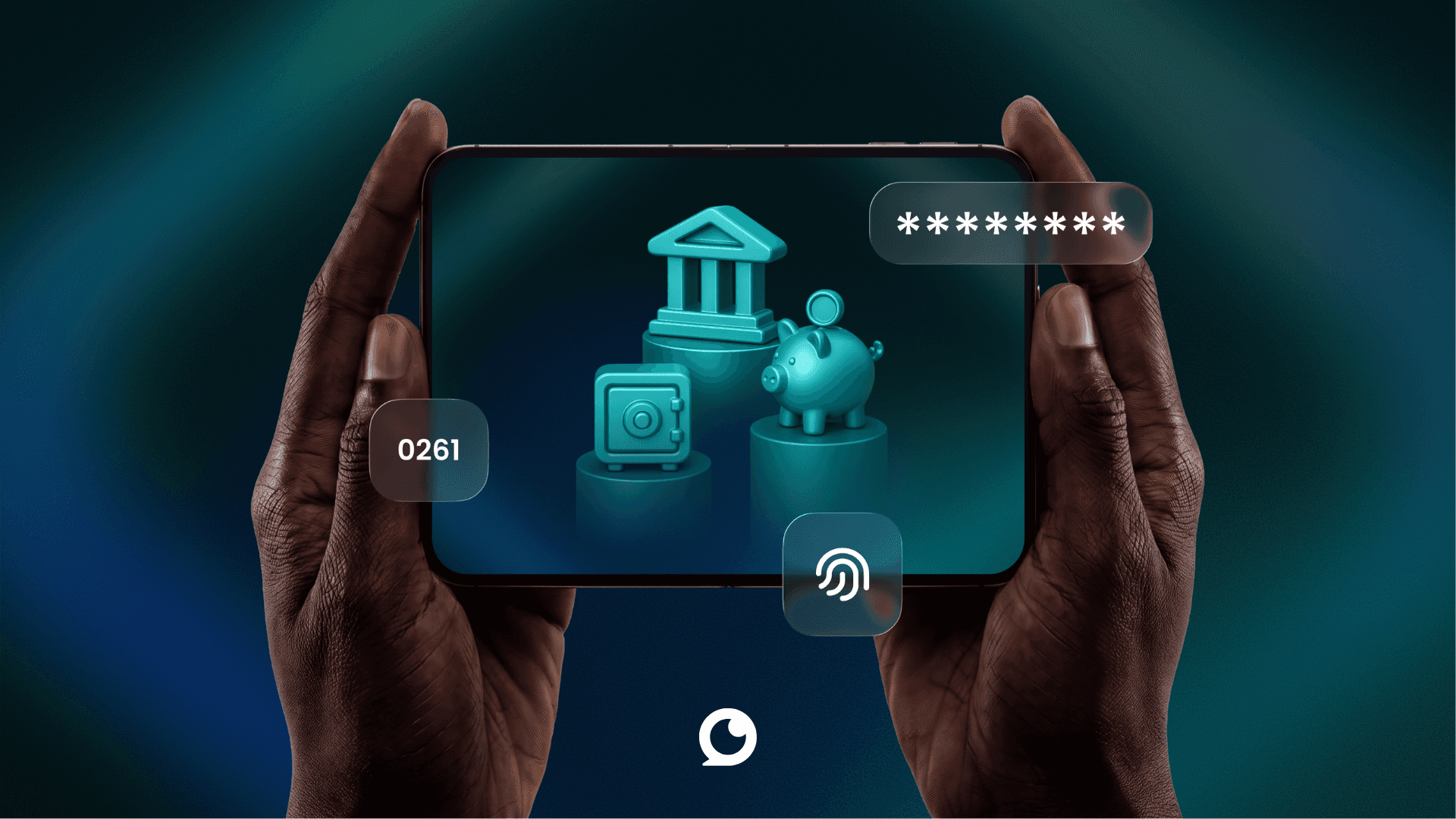
You present a password, a PIN, a fingerprint, or a one-time code. The system accepts it. A session opens. And from that moment on, everything that follows operates on a single assumption: the person who authenticated at the start remains in control.
That assumption is where the risk lives.
The Problem with Static Authentication
Static authentication — verify once, trust always — has been the dominant model in enterprise security for decades. It is fast, familiar, and relatively easy to implement. It is also fundamentally insufficient for environments where the stakes of a compromised session are high.
The issue is not that static authentication is poorly designed. It was designed to answer a specific question: Are you who you say you are at this moment? And that question is only the beginning of what regulated environments need to know.
A session opened by an authorised user can be continued by an unauthorised one. A device left unattended remains accessible. An account compromised after login is indistinguishable from a legitimate session. A user under coercion continues to operate within their own authenticated access. In each of these scenarios, the authentication system has done exactly what it was designed to do. And in each of them, the wrong person has access to sensitive information.
Static authentication has no answer to any of these situations. It verified identity at login. What happens next is outside its scope.
What Continuous Identity Verification Actually Means
Continuous identity verification is the practice of reconfirming identity throughout a session, not just at its initiation, but at every point within it.
Rather than a single checkpoint at the door, continuous verification operates as an ongoing process: monitoring, confirming, and if identity cannot be confirmed, terminating the session immediately.
The distinction matters. Static authentication asks: Were you who you claimed to be when you logged in? Continuous identity verification asks: Are you still who you claim to be, right now, at this moment?
For regulated organisations handling sensitive data — client records, privileged communications, financial transactions, personally identifiable information — the difference between these two questions is the difference between adequacy and genuine security.
How Facial Authentication and Liveness Detection Change the Equation
Continuous identity verification at the session level requires a biometric confirmation method that can operate passively, quickly, and without disrupting the user. Facial authentication meets this requirement in a way that other biometrics — fingerprint, voice, behavioural pattern — do not.
A facial authentication system can confirm the presence and identity of the authorised user continuously, in real time, without requiring deliberate input from the user at each verification point. The session continues uninterrupted as long as the right person is present. The moment they are not, access ends.
Liveness detection is what separates genuine facial authentication from a system that can be bypassed with a photograph or a recording. A liveness detection system distinguishes between a real, three-dimensional, present individual and any attempt to replicate or spoof their presence, whether that is a printed image, a video on a screen, or an AI-generated deepfake.
In 2026, liveness detection is not an optional enhancement to facial authentication. It is the control that makes facial authentication meaningful. Without it, the system can be spoofed. With it, presence verification becomes genuinely robust.
The most rigorous implementations combine facial authentication with liveness detection and depth verification, confirming not just that a face is visible, but that it is real, present, and three-dimensional. This is the standard that regulated environments require.
Why Regulated Environments Specifically Need This
The argument for continuous identity verification applies broadly. But it applies with particular force in regulated industries — financial services, legal, healthcare, defence — where the cost of a compromised session is not just operational, but regulatory, legal, and reputational.
The FCA's operational resilience framework expects firms to demonstrate that their critical business services remain protected even under adverse conditions. Adverse conditions, in practice, include the scenarios that static authentication cannot handle: a device accessed by the wrong person, a session continuing beyond the point of authorised control, or a communication channel operated by an unverified individual.
The SRA Code of Conduct requires solicitors to maintain client confidentiality across every channel through which sensitive information flows. A messaging session that continues after the authorised user has left the device is not a secure channel, regardless of whether the messages themselves are encrypted.
The Cyber Security and Resilience Bill will extend prescriptive security requirements to a wider range of organisations and supply chain participants. The communication layer — including the identity assurance of those within it — will be subject to scrutiny to which most organisations are not currently prepared.
In each of these regulatory contexts, the question is the same: can you demonstrate that the right people were in control of sensitive communications, not just at login, but throughout?
What to Look for in a Continuous Identity Verification System
Not all continuous identity verification is equivalent. For regulated environments, the requirements go beyond marketing claims.
On-device processing is non-negotiable. Biometric data — facial images, recognition data — should never leave the device. A system that sends biometric data to a server, even if encrypted, introduces a third-party risk that no regulated organisation should accept.
True continuity means verification is ongoing, not periodic. Systems that check identity every few minutes are an improvement on static authentication. They are not continuous identity verification. Genuine continuity means the confirmation is real-time, not interval-based.
Robust liveness detection means the system cannot be defeated with a photograph, a recording, or a deepfake. This requires depth sensing and three-dimensional analysis, not just two-dimensional image matching.
Immediate session termination means that when identity cannot be confirmed, the session ends. Not an alert. Not a warning. The session ends immediately, and access is removed.
Auditability without content retention means the system can demonstrate who was present, with what level of identity assurance, and for how long — without necessarily storing the content of privileged or sensitive communications.
The Shift That Is Already Happening
The move from static to continuous identity verification is not a future development. It is already underway in the most security-conscious regulated organisations, driven by a combination of evolving regulatory expectations, a more sophisticated threat landscape, and the availability of technology that makes continuous verification practical at scale.
The organisations that will lead on security in the next decade are those that have stopped asking whether their login process is secure and started asking whether their sessions are.
Continuous identity verification is the answer to the second question. And in 2026, for any organisation that handles sensitive information, it is the question that matters most.
YEO's continuous facial recognition SDK delivers on-device, continuous identity verification — combining facial authentication, liveness detection, and depth verification to confirm presence throughout every session, without storing biometric data or compromising security.
To learn more about our Continuous Facial Recognition SDK, book a demo.

Share



About us
We stopped asking "who logged in." We started asking "who's still there." YEO began as a secure messaging app. Today we build the patented continuous identity verification infrastructure that regulated industries trust to prove who's really there.